Why the Same 'White' Shirt Looks a Completely Different White Depending on the Brand
Quick Answer: “White” isn’t a single standardized color in clothing manufacturing — different brands use different fabric treatments, base fiber colors, and optical brighteners, which together produce visibly different shades (cool blue-white, warm cream-white, stark bright white) even when every label simply says “white.”
Two shirts, two labels both reading plain white, and side by side they’re clearly not the same color at all.

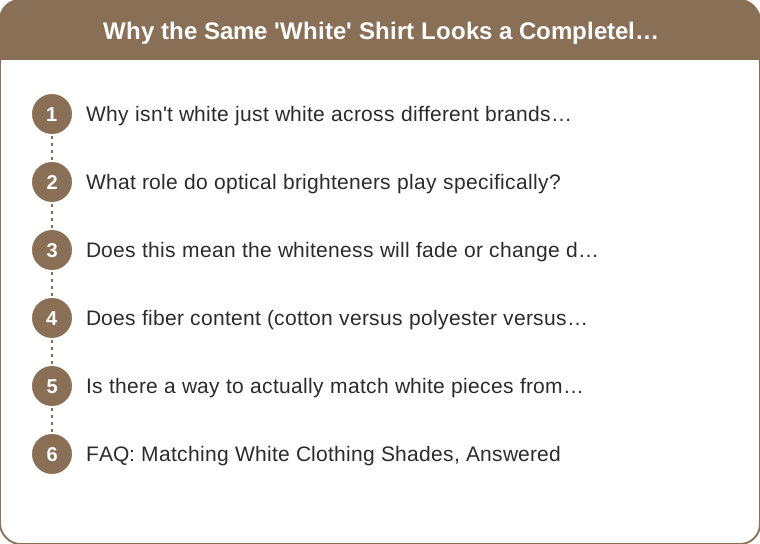
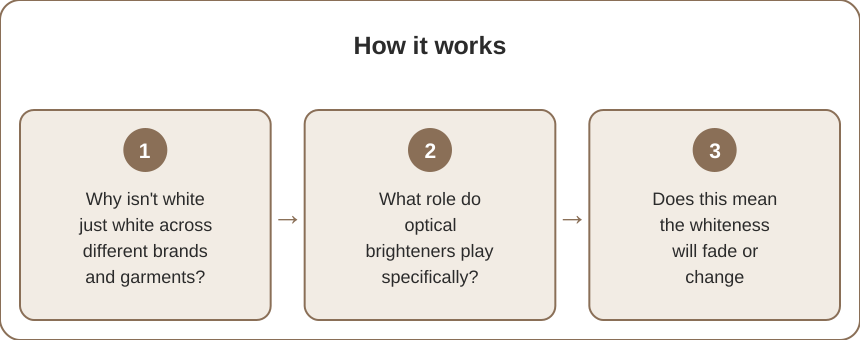
Why isn’t white just white across different brands and garments?
The base fiber itself (cotton, polyester, linen) has a natural off-white or cream undertone before any treatment, and manufacturers apply different bleaching processes and levels to reach their brand’s specific white target. Fabric type alone accounts for a meaningful part of the variation, since natural fibers and synthetic fibers respond differently to bleaching and dyeing processes even when targeting a similar visual result.
What role do optical brighteners play specifically?
Optical brighteners are chemical additives that make fabric appear whiter and brighter than the fiber’s natural bleached color alone would achieve, by converting invisible UV light into visible blue light that counteracts yellow undertones — different brands use different amounts and types of these brighteners, which is a major reason some whites look almost blue-toned bright white while others look more neutral or warm.
Does this mean the whiteness will fade or change differently over time between brands too?
Yes — optical brighteners wash out gradually over repeated laundering at different rates depending on the specific chemical used and the detergent paired with it, which is part of why a shirt that started out looking crisp bright white can drift toward a warmer, slightly yellowed white after months of washing, sometimes faster than a similarly-priced shirt from a different brand.

Does fiber content (cotton versus polyester versus a blend) affect the specific undertone?
Yes, noticeably — pure cotton whites often have a very slightly warmer, softer undertone even when bleached well, while polyester and certain synthetic blends can achieve a cooler, more stark white more consistently, since synthetic fibers respond differently to both bleaching and optical brightener treatments than natural fibers do.
Is there a way to actually match white pieces from different brands more successfully?
Comparing pieces in the same lighting condition (ideally natural daylight, since indoor lighting can shift perceived undertone significantly) before assuming a mismatch, and generally sticking to one brand or fabric type for pieces meant to be worn together as a coordinated white look, both reduce the risk of an unexpected undertone clash.
FAQ: Matching White Clothing Shades, Answered
Does washing new and older white items together cause any actual color transfer issue?
Not typically a transfer issue, but washing a bright-white item with a warmer, more yellowed white repeatedly won’t shift either one’s undertone meaningfully — the difference is inherent to the fabric and treatment, not something laundering together changes.
Can a bluing agent or white-specific detergent help unify mismatched whites?
Somewhat — detergents formulated with mild optical brighteners can boost brightness on both pieces, though they won’t fully erase an underlying fiber or treatment-based undertone difference.
Is it worth avoiding true head-to-toe white outfits because of this mismatch risk?
Not necessarily — a slight undertone variation between pieces is often visually subtle in real life; checking pieces together in daylight before committing to an outfit is generally enough to avoid a noticeable clash.
TL;DR:
- “White” fabric varies by base fiber undertone and by brand-specific bleaching treatment
- Optical brighteners add a further variable, shifting some whites toward a cooler blue tone
- These brighteners wash out at different rates, so whites age toward different final shades
- Cotton and synthetic fibers achieve noticeably different white undertones even when bleached well
- Checking pieces together in natural daylight is the most reliable way to catch a mismatch
The label says the same color, but the fabric science behind it rarely produces an identical white.
Keep Reading
Style guidance in this article is general. Fit, fabric behaviour and care vary by garment and maker — always check the care label and size guide for the specific piece you own or are considering.