How to Identify Luxury Fabrics by Touch
Quick Answer: Luxury in fabric comes down to four measurable properties: fibre length (long staple fibres make smoother, stronger yarn), yarn density (more yarn per centimetre means better drape and recovery), finish (how the surface was treated after weaving), and weight relative to thinness — the hallmark of a luxury fabric is being thin and heavy at once. You can assess all four by hand in under a minute.
Luxurious fabric is one of those phrases that describes a feeling and hides the mechanism.
But the feeling is not mysterious. It comes from four specific material properties, all of which you can check in a shop, and none of which appear on the composition label.
Here is what luxury actually means in fabric, and how to test for it.
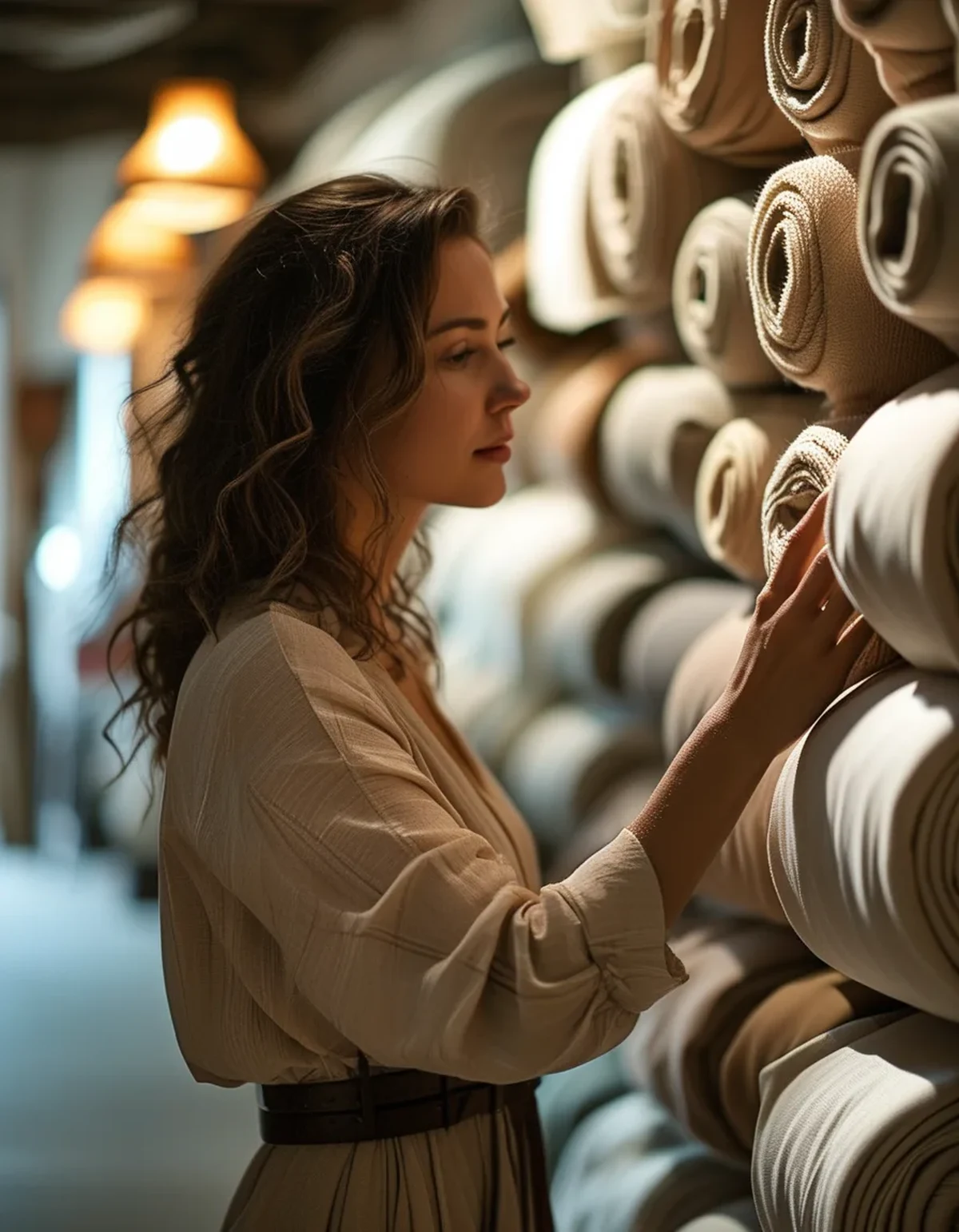
What makes a fabric luxurious in material terms?
Four properties, in roughly this order of importance.
Fibre length. Long staple fibres — Supima and Egyptian cotton, cashmere from the undercoat, mulberry silk — produce yarn with fewer loose ends. Fewer loose ends means a smoother surface, less pilling and more strength. This single property explains most of the difference between two garments with identical labels.
Yarn density. More yarn packed into the same area gives a fabric weight without thickness, which is why fine wool suiting feels substantial while being thin.
Finish. What happened after weaving: mercerising, calendering, brushing, washing. Finish is why two identical weaves feel completely different.
The weight-to-thinness ratio. This is the giveaway. A luxury fabric is heavy for how thin it is. Cheap fabric is either thin and light, or heavy and thick. Thin and heavy is expensive to make.
How do you identify luxury fabrics by hand?
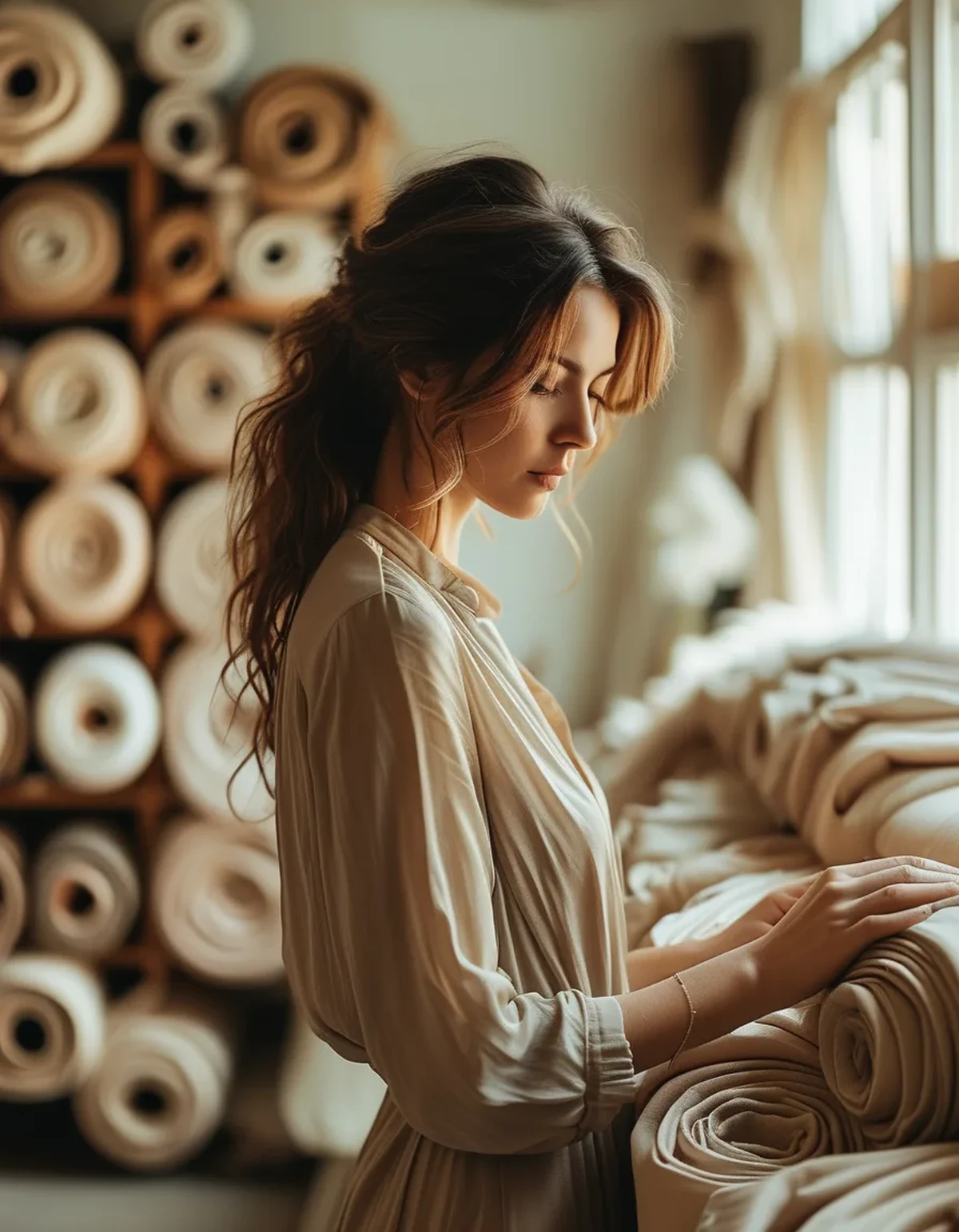
Five tests, all doable in a fitting room.
1. The drape test. Hold a section by one corner and let it hang. Good fabric falls into soft vertical folds. Poor fabric holds a shape, sticks out, or ripples horizontally.
2. The crush test. Squeeze a handful firmly for five seconds and release. Look at how fast the creases fall out. Fast recovery means good fibre and good density. Deep creases that stay are the clearest sign of low-grade fibre.
3. The light test. Hold it up to a window. Look for evenness. Thick and thin patches in the yarn mean inconsistent spinning, which is a cost signal.
4. The weight-in-hand test. Gather it and note how heavy it feels for its thinness. This is the ratio described above and it is the fastest single indicator.
5. The edge test. Look at the selvedge or an inner seam. Dense, tight, clean edges mean tight weaving. Loose, fraying edges mean the opposite.
Does the composition label tell you the quality?
Only partially, and less than most people assume.
100% cashmere covers everything from long-fibre undercoat that lasts a decade to short recycled fibre that pills in three wears. Same label, entirely different garment.
100% cotton ranges from Supima with a 35mm staple to short-staple cotton at half that length.
100% silk includes both long-filament mulberry silk and short, slubby waste silk.
What the label reliably tells you is what the fibre is not — it will not be secretly polyester. What it cannot tell you is fibre length, spinning quality, weave density or finish, which is where most of the actual quality sits.
This is precisely why the hand tests matter. They measure what the label omits.
Which fabrics reward the price and which do not?
Worth paying for:
- Cashmere — the difference between grades is enormous and immediately visible after ten wears
- Wool suiting — density and finish are what make trousers hold a crease for years
- Silk — filament quality determines both drape and durability
- Leather — full grain versus corrected grain is a decades-versus-years difference
Less worth paying for:
- Linen — the fibre is naturally strong, and the differences between mid and high price are mostly about finish and softness, which you get through wear anyway
- Denim — excellent denim exists across a wide price range, and the cut usually matters more than the cloth
- Cotton jersey — beyond a modest threshold, more money mainly buys brand rather than fibre
The rule is that fabrics where the fibre grade varies most reward money most. Cashmere varies enormously; linen does not.
What Nobody Tells You About Luxury Fabric and Wear
The best fabric in the world will not survive bad care, and care differences are larger than quality differences over three years.
Three things that matter more than most people realise:
- Rest between wears. Wool and cashmere recover their shape given 24 hours flat. Wearing the same knit two days running does measurably more damage than an extra wash cycle would.
- Heat is the enemy of every natural fibre. Hot water and tumble drying shorten the life of wool, silk and cotton alike. Cold water genuinely cleans.
- Friction points determine lifespan. Underarms, inner thighs, the shoulder where a bag strap sits. A fabric shaver used every few months on those three areas keeps a garment looking new for years longer.
And one counterintuitive point: luxury fabrics are often less robust than mid-range ones. Fine cashmere is more delicate than a wool blend. You are buying feel and drape, not durability, and treating it accordingly is part of the purchase.
FAQ: Luxury Fabric Questions, Answered
Is a higher price always better fabric?
No. Price reflects brand, design and margin as well as material. The hand tests are a better signal than the tag, and they take under a minute. Plenty of mid-price garments outperform expensive ones on all five.
What is the fastest single test?
Weight relative to thinness. Gather the fabric and notice whether it feels heavier than it looks. Thin-and-heavy is the hardest combination to manufacture cheaply, and it correlates with almost everything else.
Can synthetic fabrics be luxurious?
Some are genuinely excellent — high-grade viscose, cupro and modal all drape beautifully and often outperform cheap silk. What synthetics rarely achieve is the recovery and breathability of good natural fibre, so the honest answer depends on which property you are buying for.
TL;DR:
- Luxury is four properties: fibre length, yarn density, finish, and weight relative to thinness.
- Thin and heavy is the giveaway — it is the hardest combination to make cheaply.
- The label tells you what the fibre is, not how good it is — hand tests fill that gap.
- Cashmere, wool suiting, silk and leather reward money; linen, denim and jersey do so far less.
Spend a minute with your hands before you spend anything else. Drape, crush, light, weight, edge — five tests, and they will tell you more about a garment’s next three years than any label.
Keep Reading
Style guidance in this article is general. Fit, fabric behaviour and care vary by garment and maker — always check the care label and size guide for the specific piece you own or are considering.