Why the First Wear of a New Garment Tells You Everything
Quick Answer: A fitting room tests a garment standing still for ninety seconds under controlled lighting. A full day tests it seated, moving, warm, and in changing light — which is where every real failure appears. Wear the new piece for a full day before removing tags, and pay attention to five specific things: where it rides, where it pulls, what it does when you sit, how it handles heat, and how often you adjust it.
The fitting room tells you how it looks. The first day tells you whether you will wear it again.

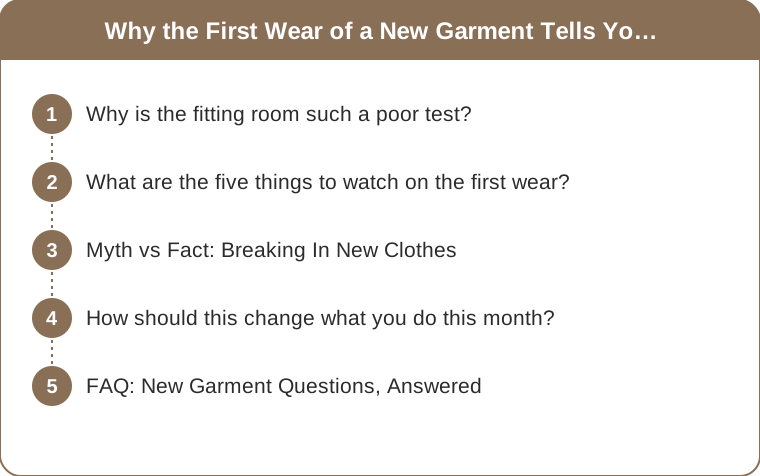
Why is the fitting room such a poor test?
Because it isolates the garment from almost every condition it will actually face.
You stand still in a fitting room. Almost every fit failure appears in movement — riding up, twisting, gaping, restricting. A garment can be perfect standing and unwearable sitting, and standing is the only position most people test.
Fitting room lighting is engineered. It is warm, positioned to be flattering, and rarely resembles daylight or office lighting. Color, opacity, and texture all read differently in it, and opacity in particular is a serious blind spot — a fabric can be opaque under warm downlighting and sheer in daylight.
The time frame is wrong. Ninety seconds is not enough for fabric to warm to body temperature, for a waistband to settle, or for a shoulder seam to start irritating. Discomfort is cumulative and almost never appears immediately.
You are not carrying anything. A bag on the shoulder changes how a coat, a knit, and a blazer all sit, and it is a permanent condition of real wear.
Temperature is controlled and static. Fabrics behave differently once you are warm — some cling, some become itchy, some show damp. A wool blend that feels lovely in an air conditioned store can be unbearable on a warm commute.
And you are focused on it. In a fitting room you are looking at the garment. In real life you are not, which is why adjustment frequency is such a useful signal — you only notice it when it is a problem.
What are the five things to watch on the first wear?
Specific, observable, and each one predicts something different.
1. Where it rides. Does the hem creep up when you walk? Does the waistband roll? Does a sleeve migrate up your arm? Riding is caused by the garment being slightly too small somewhere above the point where it rides, and it does not resolve with wear.
2. Where it pulls. Look for horizontal drag lines. Horizontal creases radiating from a button, a hip, or an armhole mean the garment is too narrow at that point. These get worse as the fabric relaxes elsewhere, not better.
3. What happens when you sit. Sit for twenty minutes, then stand and look. Where the creases are, and whether they fall out, is the single best predictor of how a garment will look at the end of a day. Fabrics with recovery release their creases within a minute; fabrics without keep them all day.
4. How it handles heat. Once you are warm, note whether it clings, itches, retains odor, or shows damp. Synthetic blends reveal themselves here and nowhere else — a garment can be entirely comfortable cool and intolerable warm.
5. How often you adjust it. Count it, roughly. Anything you touch more than a few times an hour has a fit problem you have not consciously identified, and this is the most reliable indicator of whether a garment will stay in rotation.
Two secondary checks worth running:
Fastenings. Buttons, zips, and hooks that are difficult on day one stay difficult forever, and they are a common reason expensive garments go unworn.
Sound. Some fabrics rustle audibly with movement, which is unnoticeable in a store and unavoidable in a quiet room.

Myth vs Fact: Breaking In New Clothes
Myth: It will stretch to fit. Fact: Some things stretch and most do not, and the ones that do usually stretch in the wrong direction. Rigid denim and leather relax; knits with elastane relax and then recover; woven cotton, wool, and most synthetics do not meaningfully change. A garment that is too tight across the shoulders or the back will be too tight forever.
Myth: Discomfort means you need to get used to it. Fact: Persistent discomfort is a fit or construction problem. Seams that irritate, labels that scratch, and armholes that restrict are permanent features, not a break in period. Shoes are the genuine exception; clothing largely is not.
Myth: Washing will fix the drape. Fact: Washing can soften a fabric and it cannot change the cut. The first wash more often reveals problems — shrinkage, twisting side seams, and color loss all appear then, which is why removing tags before a first wear is a risk.
Myth: Expensive garments need less testing. Fact: Price does not correlate with fit on your specific body. A high price often means more structure, which means less tolerance for a body shape the pattern did not anticipate.
Myth: If it looked good in the mirror it will look good all day. Fact: The mirror shows one moment, standing, in one light. Most garments look their worst at hour six, and that is the version other people see for most of the day.
How should this change what you do this month?
The seasonal transition is when this matters most, for two specific reasons.
Autumn stock has landed and return windows are running. Anything bought in the last few weeks is still returnable, which makes this exactly the right moment to run a first wear test on new pieces. Test before the window closes, not after.
Layering breaks garments that work alone. A knit that fits beautifully on its own may be too tight over a shirt, and a blazer that fits over a tee will not close over a knit. The transitional season is when layering starts, and it is where new autumn pieces fail.
Test in the combination you will actually wear. A first wear test of a jumper worn alone tells you nothing about whether it works over the shirt you intend to wear it with.
Temperature swings are the honest test right now. A day that starts at 60 and reaches 80 puts a garment through both conditions, which is far more informative than a stable day in either direction.
Check new knitwear for pilling after the first wear. Pilling that appears after a single wear is a serious warning about fiber quality, and it is grounds for a return. Check the underarms, the sides where a bag rubs, and the inside of the sleeves.
Check new boots at the end of a day, not the start. Feet swell, so an afternoon fit test is the honest one, and boots have a very limited window in which they can be returned once worn outside.
Do not remove tags until the test is done. This is the practical core of the whole idea. Wear it inside for a full day at home if you are unsure, which preserves the return while giving you almost all the information.
Keep the receipt with the garment, physically, until you have decided. The number of returns lost to a missing receipt during a busy season is considerable.
FAQ: New Garment Questions, Answered
How long should a first wear test be?
A full day, ideally including sitting for a stretch, walking, and being warm at some point. Two hours in a controlled environment will not reveal the problems that matter, and most fit failures appear between hour four and hour six.
Can I test without losing the ability to return it?
Yes. Wear it at home with the tags still attached and tucked in. That gives you almost all the information — riding, pulling, sitting creases, adjustment frequency — while keeping the garment in returnable condition.
What is the most reliable warning sign?
How often you adjust it. If you are touching, tugging, or repositioning a garment more than a few times an hour, there is a fit problem, and that garment will quietly leave your rotation regardless of how much you like it.
Does anything actually break in?
Leather and rigid denim genuinely relax and mold with wear. Woven wool, cotton, and most synthetics do not. If a garment is tight across the shoulders, the back, or the armholes, no amount of wear will change it.
TL;DR:
- A fitting room tests ninety seconds standing still; the failures appear seated, moving, and warm.
- Watch five things on the first wear: where it rides, where it pulls, what sitting does, how it handles heat, and how often you adjust it.
- Almost nothing meaningfully stretches except leather and rigid denim — persistent discomfort is permanent.
- Test now while autumn return windows are open, and test in the layered combination you will actually wear.
Keep the tags on and wear the newest thing you bought for a full day at home. You will know by hour six.
Keep Reading
Style guidance in this article is general. Fit, fabric behaviour and care vary by garment and maker — always check the care label and size guide for the specific piece you own or are considering.