Why Two Garments in the Same Fiber Wear Completely Differently
Quick Answer: Fiber content is roughly a quarter of what determines how a garment wears. The rest is staple length, yarn twist, fabric density, and finishing — none of which appear on any label. Long-staple fiber, tightly twisted yarn, and high density are what make one cotton shirt last six years and another two seasons. You can assess all three by hand in about twenty seconds, which is more than the composition label will ever tell you.
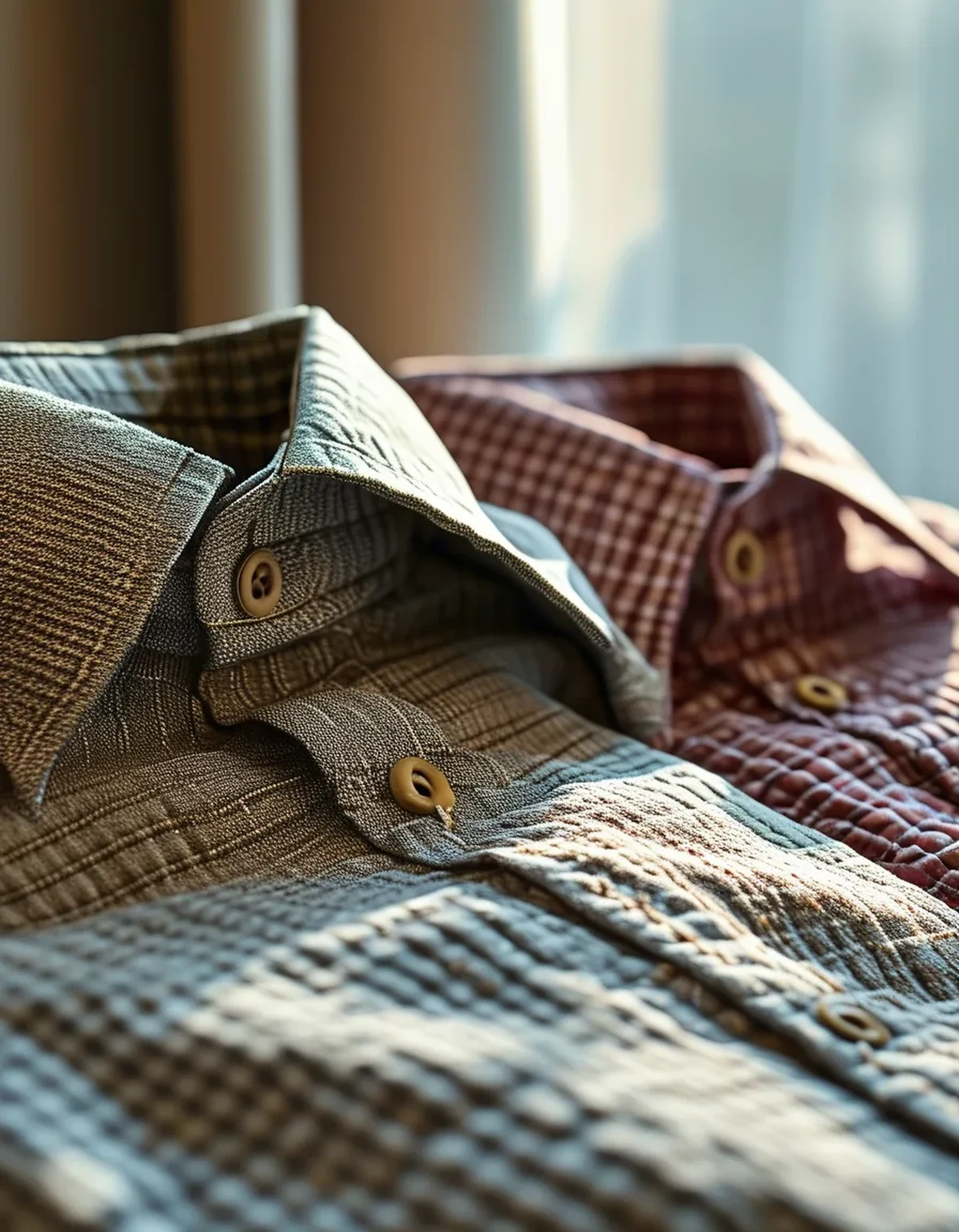
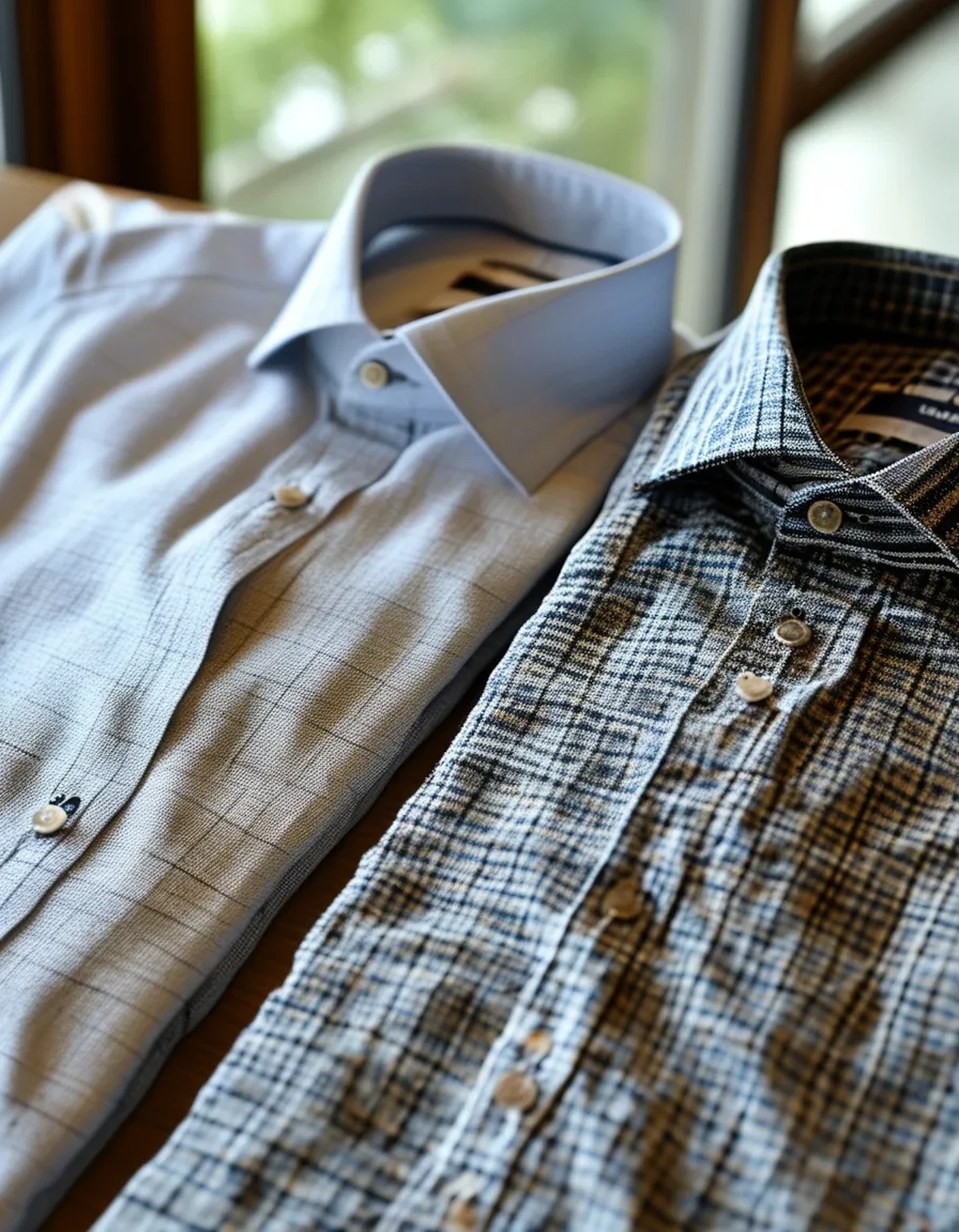
Two shirts, same fiber, same care, wildly different lifespans.
The label told you what the fiber was and nothing about how it was made into cloth — and how it was made into cloth is most of the answer.
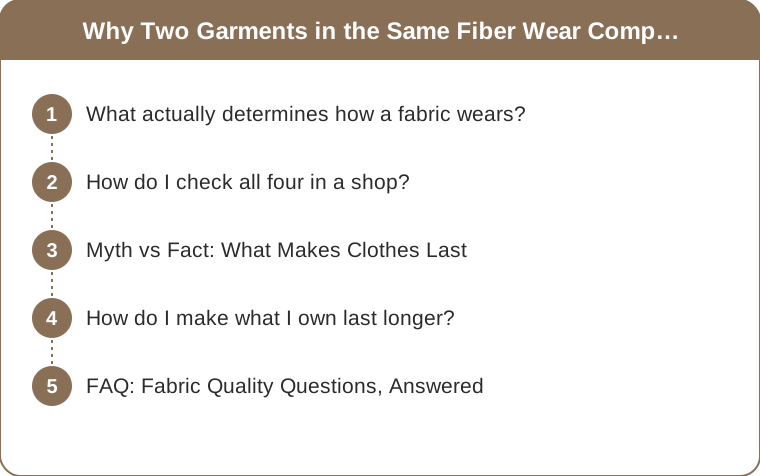
What actually determines how a fabric wears?
Four properties, in descending order of importance.
Staple length. How long the individual fibers are before they are spun. Long fibers produce smooth, strong yarn with few loose ends; short fibers produce fuzzy yarn that pills and thins. This is the single biggest quality variable in natural fibers and the reason Supima and Egyptian cottons are named on labels when they are used — because they are worth naming.
Yarn twist. How tightly the fibers are spun together. A tightly twisted yarn resists abrasion and pilling; a loosely twisted one feels softer initially and degrades faster. This is why some fabrics feel wonderful in a shop and disappoint in three months — soft hand is frequently low twist.
Fabric density. How many yarns per inch and how tightly they are packed. Density is the closest thing to a direct proxy for durability and it is the easiest thing to check yourself.
Finishing. Chemical and mechanical treatments applied after weaving — softeners, sheen treatments, anti-wrinkle resins. Most finishes wash out within ten to twenty launderings, which means the garment you own after two months is not the one you bought.
Fiber content sets the ceiling; these four decide where in that range the garment actually lands. A well-made cotton outperforms a badly made cashmere on every measure that matters.
How do I check all four in a shop?
The light test for density. Hold the fabric up against a window or a bright light. The more light passes through, the less fabric there is. Compare two garments this way and the difference is immediately obvious. This is the fastest and most reliable check available.
The stretch-and-release test for twist and density. Pull the fabric gently in both directions and let go. Good fabric returns to shape; loose fabric distorts and stays slightly distorted. Do this at a seam, not in the middle of a panel.
The rub test for staple length. Rub the surface briskly with your thumb about ten times. Short-staple fabric raises visible fuzz almost immediately — that fuzz is what becomes pilling. Long-staple fabric barely changes.
The weight test. Pick it up. Density has mass, and mass is a genuine signal. Two garments of the same size and fiber where one is noticeably heavier are not the same product.
The seam check for construction. Turn it inside out. Generous seam allowance, close even stitching, and finished raw edges indicate a manufacturer who was not cutting corners anywhere else either. Narrow overlocked seams with visible fraying are the opposite signal.
Twenty seconds total. These five checks are more predictive of a garment’s life than the brand, the price, and the composition label combined.
Myth vs Fact: What Makes Clothes Last
Myth: Natural fibers last longer than synthetics. Fact: Well-made synthetics can outlast poorly made naturals substantially. Nylon and polyester are genuinely abrasion-resistant. What synthetics do poorly is age gracefully — they develop shine and hold odor rather than wearing thin.
Myth: Softness indicates quality. Fact: Softness is frequently a finish or a low yarn twist, both of which predict shorter life. The softest thing on the rack is often the one that will disappoint you fastest.
Myth: Price predicts durability. Fact: Price predicts brand positioning. There are expensive garments in thin, loose, short-staple cloth in every price tier, and mid-priced garments in excellent cloth.
Myth: Hand wash always beats machine wash. Fact: For most garments a cool gentle machine cycle is less damaging than aggressive hand washing, which involves more agitation than people realize. Wringing is what actually destroys knitwear, and it is a hand-washing behavior.
Myth: If it survives the first year it will last. Fact: Finishes wear off over the first ten to twenty washes, which is when the real fabric becomes visible. Year two is when the truth appears, not year one.
How do I make what I own last longer?
Wash less and at lower temperatures. Most garments are washed considerably more than they need to be. Airing overnight handles odor for wool and most outer layers, and every skipped wash is measurable life added.
Wash inside out on a short cool cycle. Abrasion happens on the outer surface. Turning a garment inside out moves the friction to the inside face, which nobody sees.
Reduce the spin speed. High spin is mechanically violent and is what distorts knitwear and sets deep creases. Lower spin, longer drying — a clearly worthwhile trade.
Never tumble dry anything you care about. Heat plus tumbling is the fastest degradation available. Almost all shrinkage and most pilling in a home wardrobe originates in a dryer.
Rotate rather than repeat. Fibers need time to recover their shape between wears. Wearing the same knit three days running does several days’ worth of damage in one go.
Store properly for the season. Knitwear folded rather than hung, clean before storage — moths are attracted to body oils, not to wool itself — and never in plastic, which traps moisture and yellows fabric.
Repair early. A small seam split repaired costs a few dollars; the same split ignored for a month becomes a structural failure. The economics of early repair are overwhelming and almost nobody acts on them.
FAQ: Fabric Quality Questions, Answered
What is the single most useful check in a shop?
Hold the fabric to the light. Density is the closest thing to a direct durability proxy, and the comparison between two garments takes about three seconds.
Are blends worse than pure fibers?
Often better. A few percent elastane improves recovery, wool-silk blends add durability to both, and cotton-linen blends fix linen’s creasing. The blends to avoid are cheap polyester diluting a good fiber purely to lower cost.
Why do my clothes pill more than they used to?
Shorter staple lengths are increasingly common across the market as fiber costs rise, and low-twist yarns are used to make those short fibers feel soft. The rub test in a shop is the defense.
Is dry cleaning better for garment life?
Not usually. Dry cleaning solvents are harsh and frequent cleaning stiffens fabric over time. Many silks and fine wools hand wash or gentle machine wash perfectly well — spot clean and air far more often than you clean fully.
TL;DR: Fiber content is a quarter of the story. Construction is the rest.
- Staple length, yarn twist, density, and finishing decide how a garment wears.
- None of them appear on a label, and all four can be checked by hand.
- Hold it to the light, stretch and release, rub the surface, feel the weight, check the seams.
- Softness often means low twist or a finish — both predict shorter life.
- Finishes wash out in ten to twenty launderings. Year two shows the truth.
- Wash less, cooler, inside out, lower spin, and never tumble dry what you care about.
Do the light test on two shirts you already own — your favorite and one that disappointed. You will see the difference through the window in about a second.
Keep Reading
Style guidance in this article is general. Fit, fabric behaviour and care vary by garment and maker — always check the care label and size guide for the specific piece you own or are considering.