Why Cheap and Expensive Cashmere Both Pill (Just at Different Speeds and for Different Reasons)
Pilling on a cashmere sweater gets treated as an automatic sign of low quality, and the reality is more complicated — genuinely high-quality cashmere still pills under the right conditions, just typically slower and less severely than a lower-grade version. Here is what actually drives pilling speed and how to reduce it regardless of which cashmere you own, per the real-reason-cashmere-pills-guide logic.

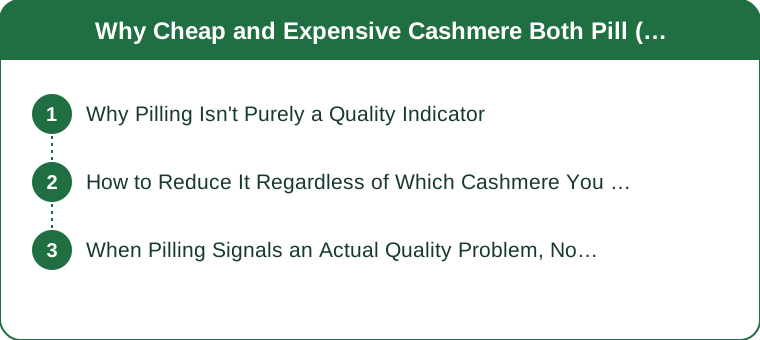
Why Pilling Isn’t Purely a Quality Indicator
The more complete picture: the the-fiber-length-affects-pilling-speed-but-doesnt-eliminate-the-underlying-mechanism-entirely (the longer fiber length in higher-grade cashmere genuinely slowing pilling by reducing how easily individual fibers work loose and tangle, per the luxury-fabric-guide logic, without fully eliminating the underlying friction-driven mechanism that causes pilling in any wool fiber — the longer-fiber-length-slows-but-doesnt-fully-eliminate-the-same-underlying-friction-mechanism-present-in-any-wool-fiber), the the-friction-from-wear-location-matters-as-much-as-the-cashmere-grade-itself (the specific areas experiencing the most repeated friction during normal wear — underarms, areas contacting a bag strap or seatbelt — pilling faster regardless of overall garment quality, since friction location is a wear-pattern variable independent of fiber grade — the friction-from-specific-wear-locations-affects-pilling-speed-independent-of-the-underlying-cashmere-grade), the the-washing-and-care-method-significantly-affects-pilling-speed-across-any-quality-tier (the washing method and detergent choice measurably affecting how quickly any cashmere, regardless of starting grade, develops pilling, meaning care habits are a variable within the buyer’s control regardless of what was purchased, per the how-to-wash-cashmere-guide logic — the washing-and-care-method-affects-pilling-speed-across-any-quality-tier-and-is-a-variable-within-the-buyers-control), and the reframe (the pilling mechanism as present in some degree across essentially all cashmere, with fiber grade affecting speed and severity rather than presence or absence — meaning some pilling on an expensive sweater doesn’t necessarily indicate it was a poor purchase).

How to Reduce It Regardless of Which Cashmere You Own
The practical care approach: the hand-wash-or-use-a-genuinely-gentle-cycle-rather-than-a-standard-machine-wash (the gentler washing motion significantly reducing the fiber friction that drives pilling compared to standard machine agitation, a change available regardless of the garment’s original quality tier — the gentler-washing-motion-reduces-fiber-friction-regardless-of-the-garments-original-quality-tier), the the-avoid-wearing-cashmere-directly-against-friction-prone-accessories-like-bag-straps-or-seatbelts-when-avoidable (the being mindful of direct, repeated friction contact points during wear, since this specific variable is controllable independent of the garment’s inherent quality — the being-mindful-of-direct-friction-contact-points-during-wear-is-a-controllable-variable-independent-of-inherent-garment-quality), the the-use-a-cashmere-comb-or-fabric-shaver-proactively-rather-than-only-reactively-after-pills-appear (the proactively and gently de-pilling at the first small signs rather than waiting for pilling to become severe, since early intervention keeps the fabric surface smoother and may slow further accumulation, per the closet-moth-protection-guide adjacent maintenance logic — the proactive-early-de-pilling-keeps-the-fabric-surface-smoother-and-may-slow-further-pill-accumulation-over-time), the the-rotate-wear-rather-than-wearing-the-same-piece-on-consecutive-days-to-reduce-cumulative-friction-exposure (the alternating cashmere pieces rather than wearing the identical sweater on consecutive days, spreading cumulative friction exposure across more pieces rather than concentrating it — the rotating-wear-across-multiple-pieces-spreads-cumulative-friction-exposure-rather-than-concentrating-it-on-one-garment), and the transition (the reduction approach as gentle washing, mindfulness around friction contact points, proactive early de-pilling, and rotating wear across pieces — though pilling that goes beyond this normal pattern is worth recognizing as a separate, more genuine quality issue).
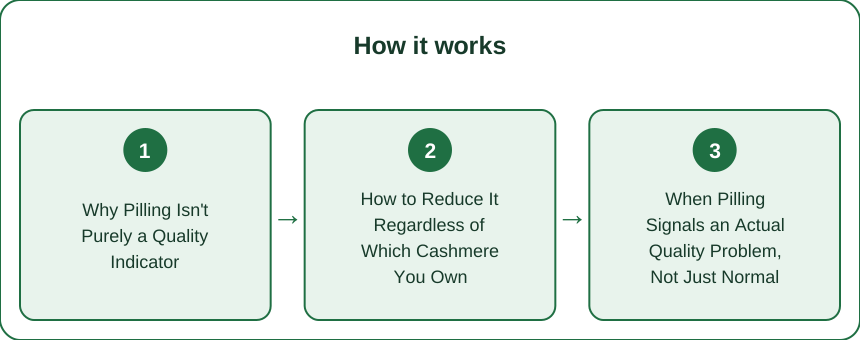
When Pilling Signals an Actual Quality Problem, Not Just Normal Wear
Where it stops being normal: the the-pilling-that-appears-within-the-first-few-wears-before-any-real-friction-exposure-suggests-a-genuine-fiber-quality-issue (the pilling showing up almost immediately, within the first handful of wears, before the garment has had meaningful cumulative friction exposure, pointing toward a genuine fiber-quality or blend issue rather than the expected slow accumulation described above — the pilling-within-the-first-few-wears-before-real-friction-exposure-points-to-an-actual-fiber-quality-problem-not-normal-gradual-wear), the the-pilling-that-spreads-across-the-entire-garment-surface-rather-than-concentrating-at-friction-points-suggests-a-different-cause (the pilling appearing evenly across low-friction areas of the garment rather than concentrating at the expected high-friction contact points, a pattern inconsistent with the friction-driven mechanism and more suggestive of a lower-quality or heavily blended fiber throughout — the pilling-spread-evenly-across-low-friction-areas-rather-than-concentrated-at-contact-points-suggests-a-fiber-quality-issue-not-normal-friction-wear), and the frame (the genuine quality signals as pilling that appears almost immediately or spreads evenly across low-friction areas rather than concentrating where friction actually occurs — worth distinguishing from the slower, friction-concentrated pilling that happens on essentially any cashmere over time).
Pilling isn’t purely a quality indicator the way it’s often assumed — longer fiber length in higher-grade cashmere genuinely slows pilling by reducing how easily individual fibers work loose, but doesn’t eliminate the underlying friction-driven mechanism entirely, while specific wear locations experiencing repeated friction and washing or care method both meaningfully affect pilling speed across any quality tier, independent of how much the garment originally cost. Reducing it regardless of which cashmere you own means hand washing or using a genuinely gentle cycle rather than standard machine agitation, being mindful of direct friction contact points like bag straps or seatbelts during wear when avoidable, proactively using a cashmere comb or fabric shaver at the first small signs rather than waiting for pilling to become severe, and rotating wear across multiple pieces to spread cumulative friction exposure. Pilling that shows up within the first few wears before any real friction exposure, or that spreads evenly across low-friction areas rather than concentrating at contact points, points to a genuine fiber-quality issue rather than the normal, slower friction-driven pattern described above.
Keep Reading
Style guidance in this article is general. Fit, fabric behaviour and care vary by garment and maker — always check the care label and size guide for the specific piece you own or are considering.