5 Ways to Spot Real Luxury Fabric Before You Buy It In Store
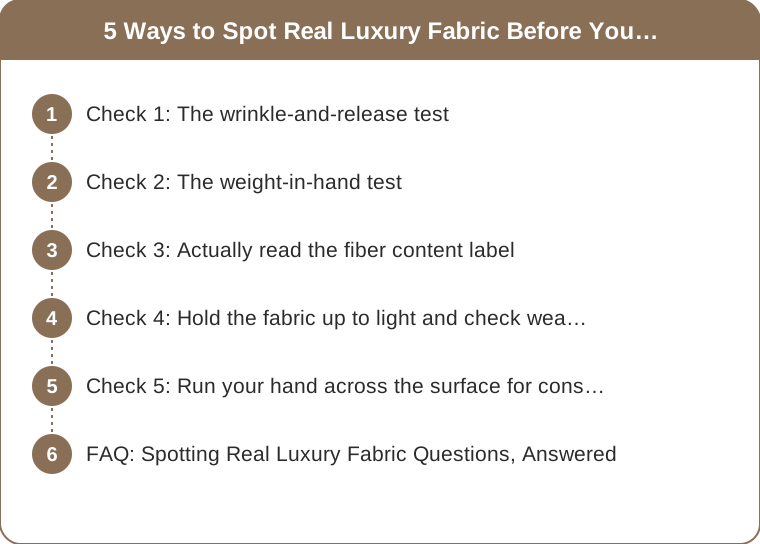
Quick Answer: You can identify genuinely high-quality fabric in a store using 5 quick checks: the wrinkle-and-release test, the weight-in-hand test, checking the fiber content label, examining the weave density against light, and running your hand across the surface for consistent texture. None require special tools, just a few extra seconds before you buy.
A high price tag is not proof of high-quality fabric, and a lower price does not always mean lower quality either - the fastest way to know for sure is checking the fabric itself. Here are 5 hands-on tests you can do in the fitting room.
Check 1: The wrinkle-and-release test
Scrunch a small section of the fabric in your fist for 5 seconds, then release it and watch how it recovers. Genuinely high-quality natural fibers - good wool, quality silk, well-woven linen - either resist wrinkling more than expected for the fiber type, or release most of the wrinkle within a few seconds. Fabric that stays deeply creased and takes a long time to smooth out, particularly in blends marketed as premium, is often a sign of lower fiber quality or a loose weave regardless of the price tag.
Check 2: The weight-in-hand test
Pick up the garment and notice the weight and drape relative to what the fabric type should feel like. Quality silk, for instance, has a satisfying heft and fluid drape - a silk-labeled piece that feels thin, papery, or stiff may be a lower grade of silk or blended more than the label suggests. This test requires some familiarity with how each fiber should feel, which builds naturally the more pieces you handle and compare.
A useful comparison trick if you’re unsure: pick up two garments labeled as the same fiber type at different price points in the same store, and handle them back to back. The weight and drape difference, once you feel it side by side, becomes much easier to recognize on future shopping trips even without a direct comparison piece in hand.
Check 3: Actually read the fiber content label
This sounds obvious, but many people check the price and skip the fiber percentage breakdown entirely. A garment labeled ‘70% polyester, 30% wool’ is a blend, not a wool garment, regardless of how the marketing describes it. Higher natural-fiber percentages generally indicate a higher material cost went into the piece, though blends are not automatically bad - some blends are engineered specifically for durability or wrinkle resistance.
Pay attention to where the fiber percentage sits within the label too - some labels list the primary fiber first even when it’s a minority percentage, so reading the actual numbers rather than skimming the fiber names in order matters if you want an accurate picture of what you’re buying.
Check 4: Hold the fabric up to light and check weave density
Hold a section of the fabric up toward a light source and look at how much light passes through. A tightly, evenly woven fabric lets through less light and shows a consistent pattern; a loosely or unevenly woven fabric shows visible gaps or irregular density. Tighter, more consistent weaves generally indicate better craftsmanship and tend to hold their shape and durability better over time.
Check 5: Run your hand across the surface for consistent texture
Slide your palm across a larger section of the fabric, not just a small corner, feeling for consistency. Genuine quality fabric feels uniform across its surface - no rough patches, slubs (unless intentional, as in raw silk), or sudden texture changes. Inconsistent texture across a single piece often signals lower-grade fiber or inconsistent processing, even within a garment that otherwise looks fine on the hanger.
Check seams and interior finishing while you’re at it - a well-constructed garment finishes its interior seams almost as cleanly as its exterior, which is a strong secondary signal of overall quality that pairs well with the fabric checks above, and it takes only a few extra seconds while you’re already examining the garment closely.
FAQ: Spotting Real Luxury Fabric Questions, Answered
Can I trust a high price tag as a shortcut for these checks?
Not entirely - price often reflects brand, design, and marketing as much as raw fabric quality. These checks are worth doing even on expensive pieces.
Do these checks work for synthetic performance fabrics too, like technical activewear?
Some do - the weight and texture checks still apply - but synthetic performance fabric quality is judged somewhat differently, often more by stretch recovery and moisture-wicking function than the natural-fiber-focused checks above.
How much should I expect to pay for genuinely high-quality fabric?
There’s no fixed number since it varies widely by fiber type and garment category, but consistently checking against these 5 tests across a range of price points helps you build an intuitive sense of what good quality actually costs at the specific retailers you shop most.
Is a wrinkled fabric always a sign of poor quality?
Not always - some fabrics, like linen, are expected to wrinkle even at high quality; the key is how well it releases with a light scrunch-and-release test, not whether it wrinkles at all.
TL;DR:
- Scrunch and release the fabric to check how well it recovers from wrinkling
- Weight and drape in your hand should match what the fiber type is supposed to feel like
- Actually read the fiber content percentages, not just the fabric name
- Hold it to light for weave density, and run your hand across for texture consistency
These 5 checks take under a minute in a fitting room and tell you far more than the price tag alone.
Keep Reading
Style guidance in this article is general. Fit, fabric behaviour and care vary by garment and maker — always check the care label and size guide for the specific piece you own or are considering.