How to Care for Wool Coats So They Last for Years
Somewhere in your closet is a wool coat you spent real money on. And somewhere in its future is the moment you pull it out in October and find it’s gone pilled, misshapen at the shoulders, or — worst case — quietly eaten.
None of that is inevitable. Wool is one of the most forgiving fibers there is, provided you stop doing the two things most people do to it.
Quick Answer: Wool is naturally odor-resistant and sheds wrinkles on its own, so it needs far less cleaning than most people assume. Brush it after each wear with a soft garment brush, air it out overnight, and dry clean only once or twice a season. Store it on a wide, sturdy hanger in a breathable garment bag — never plastic — with cedar for moth protection. Overcleaning and bad storage are what actually kill wool coats.
Why Does Wool Need So Much Less Cleaning Than Other Fabrics?
Because it’s already doing the work.
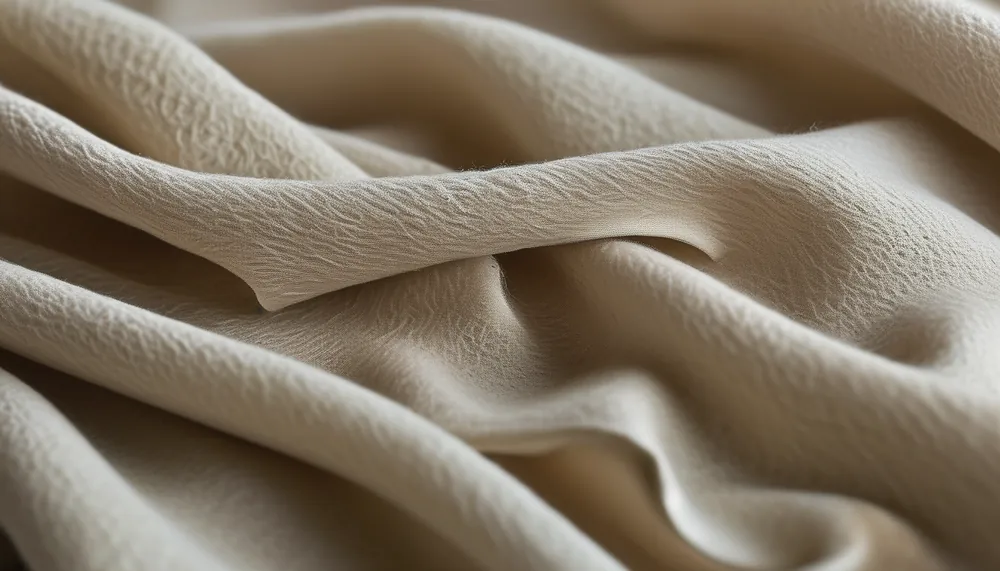
Wool fibers have a natural crimp and a scaled outer surface that gives the fiber some remarkable properties. It’s naturally odor-resistant — the fiber structure doesn’t host odor-causing bacteria the way cotton or synthetics do. It sheds wrinkles on its own when hung and given a day, because the crimp wants to return to its resting shape. And it has a degree of natural water resistance, so light rain beads and rolls rather than soaking straight in.
The practical consequence: a wool coat that’s been worn twenty times and brushed regularly is usually cleaner and better-looking than one that’s been dry cleaned five times.
Which brings us to the thing most people get backwards. Overcleaning does more damage than wearing. Dry cleaning uses solvents and mechanical agitation, and repeated exposure gradually strips wool’s natural lanolin and breaks down fibers. The coat that looks tired after three seasons usually isn’t worn out from wear — it’s worn out from cleaning.
Work with the fiber’s strengths and you’ll do less work for a better result.
What’s the Right Routine After Each Wear?
Two habits, both about two minutes total.
Brush it. Use a soft garment brush — natural bristle is ideal — and work in short downward strokes, following the direction of the nap. This lifts out surface dust and grit before it works into the weave, and it lifts the nap back up so the fabric looks fuller and richer. That slightly flat, dull appearance an older coat gets is largely compacted nap, and brushing reverses it.
Do this after every few wears at minimum, and always before storing.
Air it. Hang the coat somewhere with air circulation — not immediately back into a crowded closet — for a few hours or overnight. Wool releases absorbed odors and moisture on its own given the chance. This alone eliminates most of the reasons people send a coat to the cleaner.
Never hang a damp coat in a closet. If you’ve been caught in the rain, shake it out, hang it on a wide hanger at room temperature, away from direct heat, and let it dry fully before it goes back. Radiators and hair dryers can damage the fiber; patience can’t.
How Often Should You Dry Clean a Wool Coat?
Once or twice per season, maximum — and end-of-season is the single most important one, because you never store a coat dirty. Invisible body oils and food residue are exactly what attracts moths, and a coat that goes into summer storage unclean is the coat that comes out with holes.
Between those cleanings, spot-clean instead. For a small mark: blot — don’t rub — with a barely damp cloth and let it air dry. Rubbing felts the fibers and creates a permanently fuzzy patch that’s more visible than the original stain was.
For anything greasy, or on a coat you care about, take it to a cleaner rather than experimenting. Home stain removers are formulated for cotton and can strip color from wool.
When you do use a cleaner, point out stains specifically rather than letting them guess, and mention the coat is wool. Remove the plastic bag as soon as you get home.
Where Most Coats Are Quietly Ruined: Storage
This is where more good coats die than anywhere else.
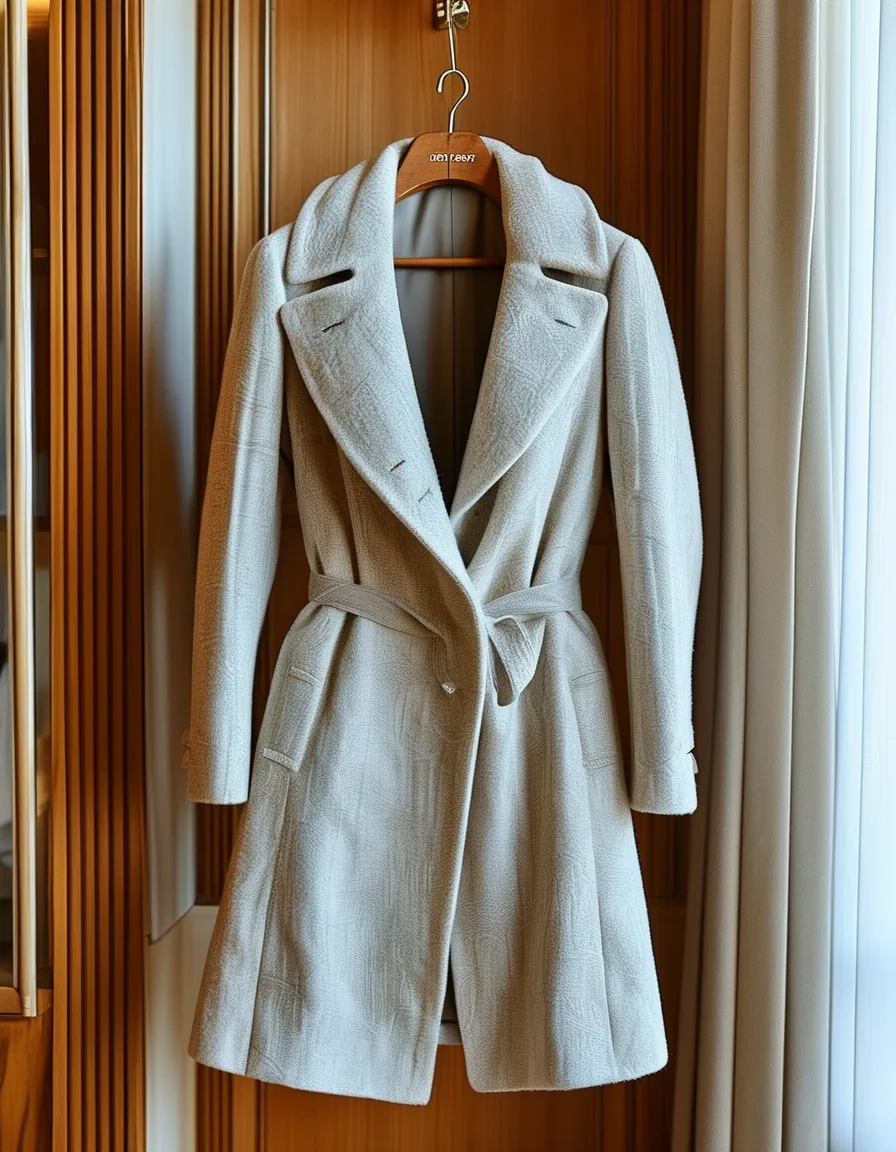
Use a wide, sturdy hanger. Shoulders are the structural heart of a coat, and a thin wire hanger creates permanent dimples and distortion that no amount of steaming fixes. A broad wooden or padded hanger supports the shoulder line the way the coat was built to be supported. This is a genuinely cheap fix for an expensive problem.
Breathable garment bag, never plastic. Plastic traps moisture against the fiber, which invites mildew and can yellow light-colored wool. Cotton or canvas garment bags let the fabric breathe.
Give it space. A coat crushed between fifteen other garments comes out creased and compacted. A few inches of air on either side keeps the shape.
Moths: clean first, then cedar. Moth larvae are attracted to soiled wool — sweat, oils, food traces — more than to clean fiber, so a proper end-of-season clean is your first and best defense. Then add cedar blocks or lavender sachets. Cedar loses potency over time; sand the blocks lightly once a year to refresh the oils. Check stored coats mid-summer for any sign of activity.
Fasten the top button when storing, so the coat hangs in its intended shape.
5 Mistakes Everyone Makes With Wool Coats
1. Dry cleaning too often. The single most common one. Every cleaning cycle costs the fiber something. Brush and air instead, and save cleaning for genuine soiling and end-of-season.
2. Using a wire hanger. Permanent shoulder dimples from a hanger that cost nothing, on a coat that cost a lot. Wide hanger, always.
3. Storing in plastic. The dry cleaner’s bag is for transport, not storage. Trapped moisture, mildew risk, and potential yellowing.
4. Ironing directly. Direct heat and pressure flatten and can scorch wool, permanently killing the nap. Steam instead — a handheld steamer, or hang the coat in a steamy bathroom for fifteen minutes and let gravity do the rest. If you must iron, use a pressing cloth on low heat.
5. Attacking pills the wrong way. Pilling is normal, especially at friction points — under the arms, where a bag strap sits, along the seat. Use a fabric comb or a wool stone, in one direction, with light pressure. Don’t pull pills off by hand, which drags fibers out of the weave, and be careful with battery-powered fabric shavers on fine wool — they can cut too deep.
FAQ
Can you wash a wool coat at home?
Generally no, not a structured coat. The interfacing, canvas, and lining are constructed to be dry cleaned, and water plus agitation causes shrinking and felting that can’t be reversed. Always check the care label — some modern wool blends are more forgiving — but a tailored wool coat should go to a professional.
How do you get wrinkles out of a wool coat?
Steam, not heat and pressure. Hang it in a bathroom while you shower, or use a handheld steamer held a few inches away, and let the coat hang undisturbed until dry. Wool’s natural crimp does most of the work — often just hanging it on a good hanger overnight resolves light creasing on its own.
How do you protect a wool coat from moths?
Clean it thoroughly before storing, since larvae are drawn to body oils and food residue rather than clean fiber. Then store it in a breathable garment bag with cedar blocks or lavender, refresh the cedar annually by sanding it lightly, and check on it once mid-season. Clean-before-storage is the step that does most of the protecting.
TL;DR:
- Wool is odor-resistant and self-shedding of wrinkles — it needs far less cleaning than you think.
- Brush after wear with a soft brush, following the nap, and air it overnight before it goes back in the closet.
- Dry clean once or twice a season, always including end-of-season. Spot-clean by blotting, never rubbing.
- Wide, sturdy hanger — wire hangers cause permanent shoulder dimples.
- Breathable garment bag, never plastic. Plastic traps moisture and can yellow light wool.
- Clean before summer storage — soiled wool is what attracts moths. Then add cedar and refresh it yearly.
- Steam, don’t iron. Use a fabric comb or wool stone for pills, one direction, light pressure.
Keep Reading
Style guidance in this article is general. Fit, fabric behaviour and care vary by garment and maker — always check the care label and size guide for the specific piece you own or are considering.