How to Build a Timeless Capsule Wardrobe with Quality Basics
Quick Answer: A capsule wardrobe is a small set of quality pieces that all coordinate, so any top works with any bottom. Start with 30–40 items for a season, built on neutral basics in one cohesive palette. The rule that does the most work: if a new piece doesn’t go with at least three things you already own, it isn’t a capsule piece.
A closet stuffed with clothes and still “nothing to wear” is one of modern life’s more reliable frustrations.
The problem usually isn’t quantity. It’s that nothing in there talks to anything else — forty items that produce about six workable outfits, because the colours fight and half the pieces only go with one specific other piece.
A capsule wardrobe fixes the coordination problem, and everything else follows from that.
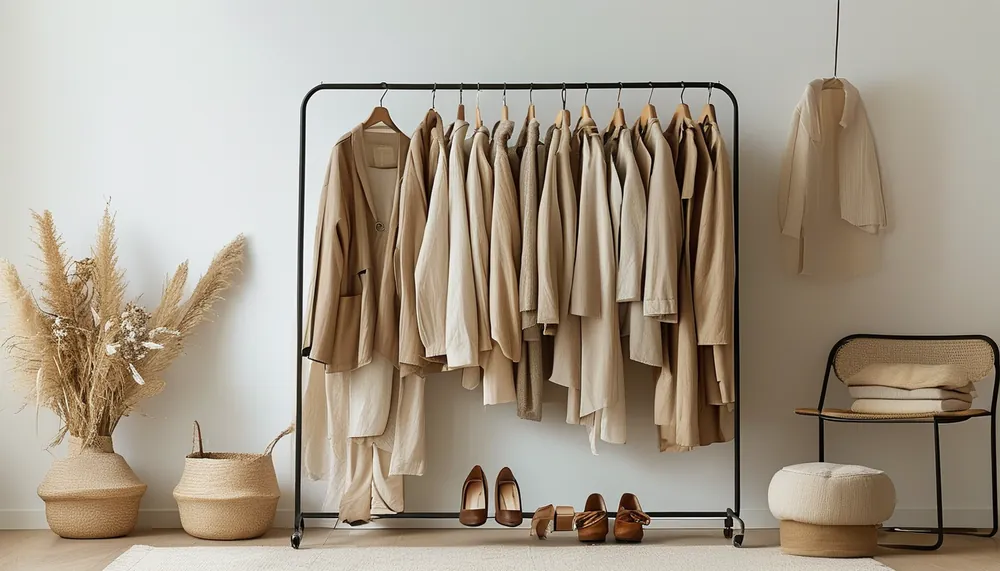
What Is a Capsule Wardrobe, Exactly?
A curated set of pieces — commonly 30 to 40 items per season, excluding underwear, activewear, and pyjamas — chosen so that they all work together.
The number matters far less than the principle. The point isn’t minimalism for its own sake; plenty of people find 40 items restrictive and 60 comfortable. The point is combinatorial: when every top works with every bottom, 12 tops and 6 bottoms give you 72 outfits. When they don’t coordinate, the same 18 items give you maybe 15.
That’s the entire mechanism. Fewer pieces, more outfits, less deciding.
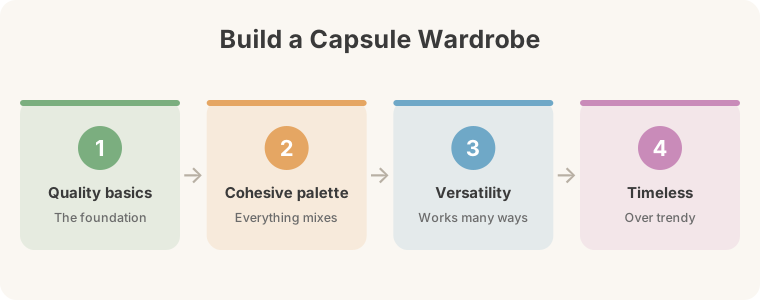
How Do You Build a Capsule Wardrobe?
1. Audit before you buy anything
Pull everything out. Sort into three piles: wear often, wear rarely, never wear. Then look hard at the “never wear” pile and identify why for each item — wrong fit, wrong colour, needs something you don’t own, uncomfortable.
Those reasons are your shopping filter for everything that comes after. Most people discover the same fault repeating across a dozen items.
2. Choose a palette before you choose pieces
Pick two or three neutrals as your base — black, navy, cream, camel, grey, olive — and one or two accent colours that work with all of them.
This is the step that makes everything else automatic. When the palette is set, any two items you own will already go together, which means you stop making outfit decisions and start just getting dressed.
A useful shortcut: choose neutrals that suit your colouring, then test the accents against them in daylight rather than under store lighting.
3. Build the foundation
The pieces that earn their place in almost every capsule:
- A white or cream shirt that fits properly through the shoulders
- Well-cut trousers in a base neutral
- Straight or slim jeans in a wash you’ll wear year-round
- A quality knit — merino or cashmere blend, in a neutral
- A classic coat that works over everything, including a blazer
- A versatile dress that goes both dressed up and down
- Two pairs of shoes minimum: one flat and comfortable, one slightly dressier
4. Apply the rule-of-three test
Before buying anything: does it go with at least three things I already own?
If the answer is no, it isn’t a capsule piece — it’s a piece that will need a whole outfit built around it, which is exactly how the “nothing to wear” closet got built in the first place.
5. Choose versatility over specificity
A dress that works with flats for daytime and heels for dinner earns twice the wear of one that only works for one context. Layerability is the same idea: a piece that works alone and under a blazer and over a shirt is three pieces.
6. Buy quality on the things that show wear
This is where “cost per wear” stops being a slogan. A $200 coat worn 200 times costs $1 a wear. A $40 coat that pills and loses shape in one season costs more.
Spend on: coats, shoes, bags, knitwear, and trousers. These take the most stress and show wear most visibly. Spend less on: trend pieces, t-shirts, and anything you expect to replace annually anyway.
What Nobody Tells You About Capsule Wardrobes
Your first attempt will be wrong, and that’s normal. You’ll build a capsule, then discover in week three that you have nowhere near enough tops and one too many blazers. Adjust. A capsule is a system you tune, not a project you complete.
Beige is not required. The internet version of a capsule wardrobe is aggressively neutral, and that’s a stylistic choice rather than a rule. If you love colour, build a coherent colourful palette. Cohesion is the requirement; blandness isn’t.
It doesn’t mean buying nothing. Capsules get replaced as things wear out and get refreshed each season. The change isn’t buying less for its own sake — it’s buying deliberately, which usually means less as a side effect.
Fit beats brand every time. A well-fitting item from anywhere outperforms a poorly fitting expensive one. Budget for tailoring — hemming trousers costs about $15 and transforms how a piece looks.
Don’t forget what you actually do all day. A capsule built around office wear, when you work from home four days a week, will fail immediately. Look at your real week: if it’s three days casual, one day smart, and two days activewear, your capsule should be weighted the same way. A pair of high waist yoga pants you’ll genuinely wear four times a week deserves the same consideration as the blazer you’ll wear monthly.

Why Does It Actually Work?
Fewer decisions. Getting dressed stops being a daily puzzle when every combination already works.
Better cost per wear. Fewer, better pieces worn more often is cheaper over time than a rotating pile of cheap ones.
Less waste. Buying deliberately means fewer items ending up unworn, and clothing that lasts years rather than months.
You always look intentional. Cohesive by design rather than by luck — which is what “put-together” actually means.
FAQ
How many items should be in a capsule wardrobe?
Commonly 30–40 per season, excluding underwear, activewear, and sleepwear. Treat that as a starting reference, not a rule — the right number depends on your climate and how varied your week is.
Do I need a separate capsule for each season?
Most people run two (warm and cold) with a shared core of items that work year-round. Base neutrals, jeans, and good knitwear carry across; the seasonal layer is outerwear, fabric weight, and a few pieces.
What if I get bored wearing the same things?
Rotate the accents rather than the base. Scarves, jewellery, and one or two seasonal pieces refresh a capsule without breaking its coherence — and boredom usually signals the palette is too narrow, not that the system is wrong.
TL;DR:
- A capsule is about coordination, not about owning less for its own sake
- Audit first and note why you don’t wear things — that’s your buying filter
- Pick 2–3 neutrals plus 1–2 accents before choosing any pieces
- Rule of three: if it doesn’t go with three things you own, skip it
- Spend on coats, shoes, and knitwear; save on trend pieces and tees
- Weight the capsule toward what your week actually looks like
- Budget for tailoring — fit beats brand every time
This article is for general styling and informational purposes only. Fit and sizing vary by brand.
Keep Reading
Style guidance in this article is general. Fit, fabric behaviour and care vary by garment and maker — always check the care label and size guide for the specific piece you own or are considering.