Moth-Proofing the Closet: Protecting Wool, Cashmere and the Pieces That Matter
Quick Answer: Moths don’t actually eat your sweaters — their larvae do, and they go after soiled animal fibers like wool, cashmere, and silk left undisturbed in the dark. Clean every garment before you store it, add cedar or lavender as a deterrent (not a killer), seal off-season knits in breathable bags or sealed bins, and freeze any suspect vintage or secondhand wool for a few days before it joins your closet.
You pull out your favorite cashmere sweater for the first cool morning of the season, and there it is: a small, ragged hole right over the shoulder. It’s a rite of passage nobody asked for, and by the time you spot the hole, the real damage has usually been happening for weeks. Here’s the lifecycle that explains it, the prevention system that actually works, and exactly what to do the moment you find a hole.
Do moths really eat clothes?
Not the moths you see fluttering around your closet light. Adult clothes moths don’t eat fabric at all — they don’t even have functioning mouths for it. It’s their larvae, the tiny caterpillar-like grubs you’ll almost never notice, that do all the chewing. The fluttering adult moth is just the parent of the problem, not the problem itself, which is why swatting one down does basically nothing.
Those larvae are picky eaters, too. They go after animal fibers — wool, cashmere, silk, feathers, and fur — and mostly ignore synthetic blends and plain cotton. That’s useful information: it tells you exactly which shelves in your closet need the extra attention. Larvae also have a strong preference for dark, undisturbed, and soiled fabric. Body oils, food residue, and sweat left on a “worn once, then stored” sweater are basically an all-you-can-eat buffet. And because warmer months speed up the moth life cycle, a winter sweater stashed away dirty in June can come back out in October with a hole already chewed through it.

How do you moth-proof a closet?
Prevention is layered, and no single step does the whole job on its own.
- Clean before you store. This is the one rule that prevents most damage. Larvae target soil, so a freshly cleaned garment is a poor host — think of it as giving every knit a proper send-off before its off-season nap.
- Use cedar and lavender honestly. Both deter moths; neither one kills them. Sand cedar blocks every few months to refresh the scent, and swap lavender sachets each season. These are a support system, not a substitute for clean storage.
- Add a real physical barrier. Breathable cotton garment bags work well for hanging wool, while sealed bins are better for off-season knits in storage. A vacuum-sealed bag is fine too, but only for pieces you won’t need to grab in a hurry.
- Keep things moving. Moths hate traffic and disturbance. A monthly closet shuffle, plus wearing your wool pieces in regular rotation, protects everything that sealed bins and bags don’t cover.
- Quarantine anything secondhand. Thrifted or inherited wool should go through the freezer or a cleaner before it joins the rest of your closet — more on why in a second.
What do you do when you find a moth hole?
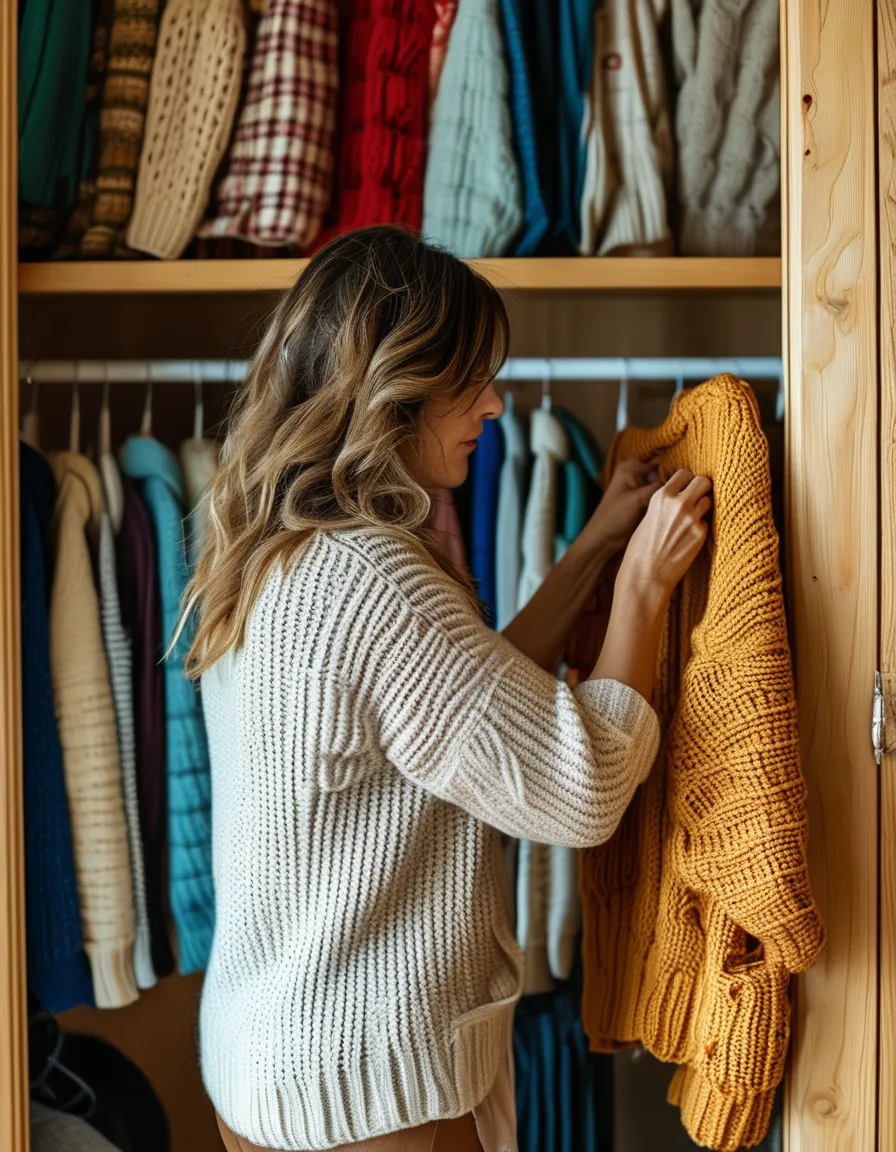
First, don’t just patch the one hole and move on — inspect everything made of animal fiber. Larvae rarely dine just once, so if you found a hole in one sweater, there’s a good chance something else nearby has been nibbled too. Yes, that means the closet-emptying session nobody wants but everybody eventually needs.
Once you’ve found the damage, here’s how to actually stop it:
- Kill the larvae. The classic home method is the freezer: seal the garment in a bag and freeze it for about 3 to 4 days. For fabrics that can tolerate it, a hot wash or a trip to the dry cleaner works too. Structured pieces that can’t be washed or frozen do well with sunlight and thorough brushing.
- Treat the whole closet, not just the sweater. Vacuum every corner, crack, and carpet edge — larvae pupate in the room itself, not only inside your wool. Empty the vacuum bag outside immediately, and wipe down the shelves while you’re at it.
- Set pheromone traps. These catch adult males and function more as a monitor than a cure — think of the trap count as your progress meter. A month of empty traps is a good sign the infestation is actually over.
- Repair with dignity. A moth hole in a loved knit isn’t a death sentence — it’s a job for visible mending or an invisible-repair service. Damage, not doom.

How do you keep moths from coming back?
Ongoing vigilance is really just a short seasonal habit, not a full-time job. Fold your moth check into the wardrobe changeover you’re already doing: clean everything going into storage, inspect everything coming out, and refresh the cedar while you’re at it — about twenty minutes, twice a year.
Pay special attention to your closet’s risk zones — the undisturbed corners like the formal-wear end, the scarf drawer, or a box tucked under the bed. These are the spots that earn a trap and a little extra checking. Moths also tend to show up wherever dust and humidity build up, so the same vacuum-and-air routine that keeps dust mites down does double duty here (bonus: your allergies will thank you too).
Here’s the honest perspective: moth-proofing is cheap insurance on the most expensive real estate in your closet. That cashmere sweater that cost real money survives on habits that cost minutes. The first hole teaches everyone this lesson eventually — it just doesn’t have to be your cashmere doing the teaching.
Myth vs. Fact
Myth: The moths flying around your closet are the ones eating your clothes. Fact: Adult moths don’t eat fabric at all. It’s the larvae — small, pale, and easy to miss — that do the actual chewing, which is why you can have damage without ever spotting an adult moth nearby.
Myth: Cedar and lavender kill moths. Fact: They’re deterrents, not pesticides. They make a space less appealing to moths looking for somewhere to lay eggs, but they won’t do a thing to an infestation that’s already underway — that part is on you and your freezer.
Myth: Only cheap or old clothes get moth holes. Fact: Moths don’t care about price tags. They care about fiber content and cleanliness, so a brand-new cashmere sweater stored dirty is just as much at risk as a decades-old hand-me-down — arguably more, since it’s fresher and softer.
Myth: If you don’t see moths, you don’t have a problem. Fact: This is exactly where most infestations sneak up on people, and honestly, the way most of them actually start might surprise you (hint: it’s rarely your own closet’s fault).
FAQ
Do cedar blocks actually work against moths?
Cedar blocks work as a deterrent, not a killer — the scent discourages moths from settling in, but only while it’s strong. Sand the surface every couple of months to release fresh oil, and pair it with clean storage for real protection.
Can you save a sweater that already has a moth hole?
Yes, in most cases. Once you’ve killed any remaining larvae and treated the closet, a hole can be fixed with visible mending or a professional invisible-repair service — it’s fabric damage, not the end of the garment’s life.
How long do you need to freeze clothes to kill moth larvae?
The standard home method is sealing the garment in a bag and freezing it for about 3 to 4 days. This is the go-to option for anything you can’t wash or dry-clean, including suspect vintage or secondhand wool pieces.
TL;DR:
- Adult moths don’t eat fabric — their larvae do, and they target soiled wool, cashmere, silk, and feathers.
- Clean every garment before storing it; this single habit prevents most damage.
- Cedar and lavender deter moths but don’t kill them — use them alongside clean, sealed storage, not instead of it.
- Found a hole? Inspect every animal-fiber piece nearby, freeze suspect garments for 3–4 days, vacuum the closet thoroughly, and set pheromone traps to monitor progress.
- A hole is fixable damage, not a death sentence — visible mending and repair services exist for exactly this.
- Build a twenty-minute, twice-a-year moth audit into your seasonal wardrobe switch, and always quarantine secondhand wool before it joins your closet.
Keep Reading
Style guidance in this article is general. Fit, fabric behaviour and care vary by garment and maker — always check the care label and size guide for the specific piece you own or are considering.